

What is bone grafting?
Bone grafting is a surgical procedure aimed at restoring or reconstructing damaged or missing jaw bone. This is a common treatment for patients suffering from bone loss due to gum disease, trauma, or tooth extraction. During the procedure, bone material is transplanted into the damaged area to enable better support for future dental implants and to preserve the structure of the jaw and gums. The treatment helps improve the stability of teeth and overall dental rehabilitation.
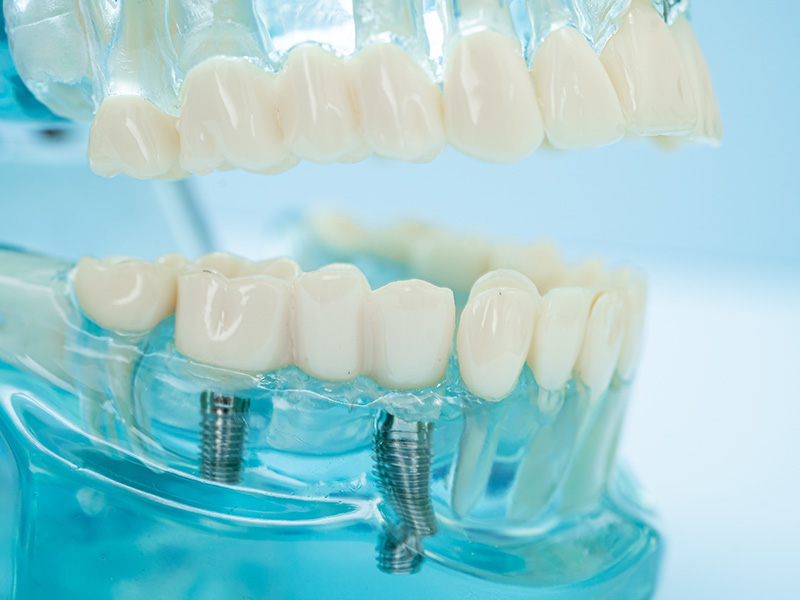
When there is a need to perform oral rehabilitation treatment, such as replacing missing teeth in a place where a natural tooth is missing, a dental implant can be inserted into the bone (or multiple dental implants) and used as a substitute for a natural tooth root.
In order to do this, the patient must have sufficient bone volume for the dental implant to be stable – but sometimes, for various reasons, the existing bone volume in the patient is too thin.
In such a case, it is customary to perform bone grafting: a process in which bone taken from another location in the patient's body or an external material that simulates bone can be transplanted, and thus the existing bone volume can be "thickened" in order to insert the implants into it in a stable manner – and continue with the teeth rehabilitation processes.
What are the reasons for insufficient bone volume?
There are many different reasons why bone volume is too small to allow rehabilitation treatment without bone grafting:
- Tooth loss due to cavities (holes in teeth), poor root canal treatment or trauma, and consequently also relative loss of the bone supporting the teeth (since this bone is formed together with the formation of teeth and disappears after their extraction). The more time passes after tooth extraction, the more jaw bone is typically resorbed.
- Bone loss as a result of gum disease, characterized by severe resorption of the bone supporting the teeth.
- Systemic diseases or medications that can damage and cause bone depletion (for example, long-term use of steroids).
- Surgical operations in the jaw area (such as surgeries for extracting impacted teeth or removing tumors).
- Missing teeth as a result of a congenital defect or other biological processes that can be attributed to familial tendency.
Bone grafting methods
There are several methods by which the process can be performed:
- Grafting bone taken from another place in the patient's body (usually from the hip or from the back parts of the jaw). This option is good because the chance of rejection of the transplanted bone is lower, but it is also very invasive. In fact, it involves an additional surgical site.
- Grafting bone taken from an external living source, such as another person or from an animal.
- Grafting synthetic material, such as calcium sulfate (plaster). The synthetic material does not mimic natural bone but serves as a basis for new natural bone growth. Each method has advantages and disadvantages, and in order to choose the most suitable method for each patient, consultation with the doctor is necessary in light of the rehabilitation plan expected to follow.
How is bone grafting performed?
The procedure is surgical and constitutes surgery in every respect, meaning it must be performed in a sterile room in order to minimize the risk of infections.
It usually lasts between one to two hours, depending on the location where the graft must be performed and the method chosen.
The procedure is performed under anesthesia – usually local only but sometimes also general anesthesia or under sedation.
When performing bone grafting, the doctor makes an incision in order to expose the jaw bone, inserts the bone substitute (or the synthetic material) and finally stitches the operated area.
In most cases, before stitching, there is also a need to cover the bone substitute with a special membrane (there are different membranes, absorbable and non-absorbable), in order to isolate the site from the soft tissue above it, and allow efficient bone formation.
At this stage the patient is sent home for rest and initial recovery lasting about one to two weeks.
During the recovery period, the patient must take antibiotics or other medications according to the doctor's instructions, and also take care to maintain oral cavity hygiene. One must come for a check-up according to the doctor's instructions, after one or two weeks, for follow-up and/or suture removal. Now the patient must wait several months until complete healing of the graft area.
During this time, the transplanted bone should fuse with the original bone; and thus sufficient bone volume will be obtained so that the oral rehabilitation process can continue – insertion of dental implants, etc.
Sometimes it may be possible to insert the dental implants already in the same framework of performing the bone graft, but only on condition that the dental implants can be properly stabilized in the existing part of the bone.
Bone grafting after extraction
When a tooth is extracted from its place, the bone underneath it begins to be resorbed and disappear naturally. As a result, if after some time there is a need to perform dental implantation in the same place, the remaining bone volume may be too little to allow stable grip of the implants in the jaw. Although in such a case it will be possible to perform bone grafting in the future as described above, but in certain circumstances, and with proper planning, it is also possible to perform it immediately after extraction. In professional language, this action is called "socket preservation." Within the framework of the socket preservation process, bone material (or bone substitute) is transplanted immediately at the end of extraction in place of the missing tooth. Thus, the natural resorption of the bone is actually slowed down – and the bone volume is preserved in the long term, which allows:
- Preserving the natural and aesthetic appearance of the area (especially important for preventing the appearance of a "depression" in the gums in the case where the site is restored using a "pontic" – part of a bridge on teeth that hangs in the air);
- Allows performing the implantation in the future without the need for extensive bone building, and usually with better results. Although, it is important to note, that not every extraction requires bone grafting, especially when planning to install a dental implant in the period close to extraction (2-3 months, which is usually the optimal timing for implant installation).
Why is it important to perform bone grafting after extraction?
One of the reasons why a patient may not have sufficient bone volume for dental implant installation after tooth extraction is resorption of the alveolar bone of the jaw – the bone that contains and anchors the tooth roots.
This is a process that occurs in the body naturally, as the alveolar bone develops together with teeth and gradually disappears after the teeth are extracted. In a gradual process, the bone is resorbed and actually decreases. The gums also recede, and the more time passes, the smaller the bone volume becomes – until finally too little remains to be able to perform dental implantation properly.
This is exactly the reason why in certain cases it is recommended to perform bone grafting after extraction (an action also called "socket preservation"): this way it is possible to optimally preserve sufficient bone volume for future dental implantation.
It is important to note that not every case of extraction justifies performing socket preservation. One should consult with a specialist doctor.
Side effects of bone grafting
In the first days after bone grafting surgery, local swelling may occur in the operated area, but it should subside on its own within a few days to one or two weeks.
Bruising may also appear on the skin and disappear naturally.
If these phenomena do not disappear after two weeks from the day of surgery, or alternatively if a decrease in sensation is felt in this area, or a feeling as if the anesthesia has not worn off – one should contact the doctor immediately.
What are the risks of bone grafting?
Like other types of transplants, bone grafting is also a procedure that in certain cases may fail due to the body's rejection of the foreign material transplanted into it.
The risk of this can be reduced when transplanting bone from another source in the same patient's body, but this is a risk that always exists.
Additional risks may include infection in the operated area, pressure on the area where the bone was transplanted, or displacement from its location.
In such cases, there will be no choice but to repeat the same process again – and likewise in cases where the process does pass successfully but simply not enough bone volume is created to continue the rehabilitative treatment in the mouth, so a second bone graft is needed.
It is important to emphasize: the more skilled and experienced the doctor performing the bone graft, the higher the chances of graft success.
What should be done before and after oral bone grafting surgery?
Before treatment, teeth cleaning and tartar removal should be performed by a dental hygienist or dentist, in order to remove as many bacteria, cavities, and tartar as possible from the oral cavity (because they may later become foci of infection and make the success of the graft more difficult).
After the graft, one must strictly follow the doctor's instructions and take the prescribed medications in order.
It is also important to maintain oral hygiene well, especially during the recovery period.
Good to know: Unbalanced chronic diseases, such as diabetes, may reduce the chances of the process's success.
The same applies to smoking and alcohol.
It is recommended to avoid performing strenuous physical activity and consuming very hot or very hard foods in the first days after surgery.